Energy performance certificates to play important role in improving building energy consumption – IEPA


Energy performance certificates (EPCs) are expected to play an increasingly important role in improving building performance, supporting informed investment decisions, reducing operational energy consumption and strengthening accountability across public and private sectors as part of South Africa's National Energy Efficiency Strategy.
Following the expiry of the national EPC compliance deadline, building owners, accounting officers, facilities managers and property professionals are encouraged to familiarise themselves with their obligations under the EPC Regulations and begin engaging with registered EPC professionals where compliance has not yet been achieved.
The EPC Regulations are important as they are South Africa's first mandatory legislation requiring qualifying buildings to publicly disclose their operational energy performance, said industry organisation the Institute of Energy Professionals Africa (IEPA) during a webinar on the implementation and enforcement of South Africa's EPC Regulations on July 31.
The discussions focused on practical implementation, regulatory enforcement, legal obligations and new digital tools that will support improved compliance across South Africa's qualifying commercial and public building sector.
The EPC Regulations apply to qualifying non-residential buildings, including publicly owned, occupied or operated buildings with a net floor area of 1 000 m2 or larger, and privately owned qualifying buildings with a net floor area of 2 000 m2 or larger.
Specifically, the regulations require qualifying buildings to obtain an EPC from a registered EPC professional, display the certificate publicly at the main entrance, and submit a certified copy to the State-owned South African National Energy Development Institute for inclusion in the National Building Energy Performance Register (NBEPR).
Department of Electricity and Energy (DEE) energy efficiency and environment director Xolile Mabusela reported that the DEE had made progress in establishing an EPC Compliance Monitoring, Verification and Enforcement Framework to support building owners while progressively strengthening regulatory enforcement.
The DEE's proposed framework follows a graduated approach over a 12-month implementation period, beginning with noncompliance notices, acknowledgement by building owners, compulsory EPC compliance plans, municipal partnerships for inspections and monitoring, followed by public listing of persistent noncompliance and, where necessary, prosecution under the National Energy Act.
He also highlighted that municipalities were expected to play an increasingly important role in supporting compliance monitoring and verification, while ongoing skills development initiatives would help expand national EPC implementation capacity.
Meanwhile, failure to comply with the EPC Regulations may expose organisations and their office bearers to significant legal, governance and reputational risks, particularly where directors, trustees or accounting officers knowingly failed to comply with statutory obligations, said law firm Stroebel Singh Theunissen Attorneys partner Ashmini Singh.
While the National Energy Act provided for penalties of up to R5-million, imprisonment of up to five years, or both, for offences, the legislation currently provided limited procedural guidance regarding compliance inspections and enforcement mechanisms, she noted.
She proposed voluntary compliance as the preferred pathway for organisations, with formal complaints and criminal proceedings reserved as measures of last resort for deliberate and persistent noncompliance.
In terms of technology support for compliance, industrial automation company PAS Automation Services MD Nirmal Narotam demonstrated the easyEPC compliance reporting platform, which had been designed to support the identification and reporting of potentially noncompliant buildings.
This platform enables members of the public, EPC registered professionals and other stakeholders to submit reports on qualifying buildings. Submitted information undergoes validation before building ownership, registration status and compliance levels are assessed using available data sources.
The platform was designed to support future compliance monitoring and case management processes, he added.
Further, the webinar demonstrated the strong collaboration developing between government, industry, legal practitioners, technology providers and the EPC professional community to support implementation of South Africa's building energy performance legislation, the IEPA said.
While significant work remains to increase national compliance levels, particularly across large building portfolios, the discussions reflected a shared commitment to improving regulatory certainty, strengthening enforcement mechanisms and accelerating the country's transition towards more energy-efficient buildings.
Article Enquiry
Email Article
Save Article
Feedback
To advertise email advertising@creamermedia.co.za or click here

Projects


Latest Multimedia

Latest News
Showroom
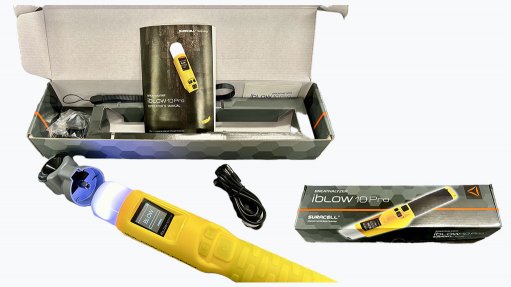
Supplier & Distributor of the Widest Range of Accurate & Easy-to-Use Alcohol Breathalysers
VISIT SHOWROOM
Rio Carb is an OEM (Original Equipment Manufacturer) of R-C700 Chromium Carbide (CrC) alloy clad wear plates and pipes used for heavy materials...
VISIT SHOWROOM



Press Office
Announcements
What's On
Subscribe to improve your user experience...
Option 1 (equivalent of R125 a month):
Receive a weekly copy of Creamer Media's Engineering News & Mining Weekly magazine
(print copy for those in South Africa and e-magazine for those outside of South Africa)
Receive daily email newsletters
Access to full search results
Access archive of magazine back copies
Access to Projects in Progress
Access to ONE Research Report of your choice in PDF format
Option 2 (equivalent of R375 a month):
All benefits from Option 1
PLUS
Access to Creamer Media's Research Channel Africa for ALL Research Reports, in PDF format, on various industrial and mining sectors
including Electricity; Water; Energy Transition; Hydrogen; Roads, Rail and Ports; Coal; Gold; Platinum; Battery Metals; etc.
Already a subscriber?
Forgotten your password?
Receive weekly copy of Creamer Media's Engineering News & Mining Weekly magazine (print copy for those in South Africa and e-magazine for those outside of South Africa)
➕
Recieve daily email newsletters
➕
Access to full search results
➕
Access archive of magazine back copies
➕
Access to Projects in Progress
➕
Access to ONE Research Report of your choice in PDF format
RESEARCH CHANNEL AFRICA
R4500 (equivalent of R375 a month)
SUBSCRIBEAll benefits from Option 1
➕
Access to Creamer Media's Research Channel Africa for ALL Research Reports on various industrial and mining sectors, in PDF format, including on:
Electricity
➕
Water
➕
Energy Transition
➕
Hydrogen
➕
Roads, Rail and Ports
➕
Coal
➕
Gold
➕
Platinum
➕
Battery Metals
➕
etc.
Receive all benefits from Option 1 or Option 2 delivered to numerous people at your company
➕
Multiple User names and Passwords for simultaneous log-ins
➕
Intranet integration access to all in your organisation